Comparisons & Buying Guides
Apartment Rower Space Comparison: Precise Measurements
6th May•10 min read
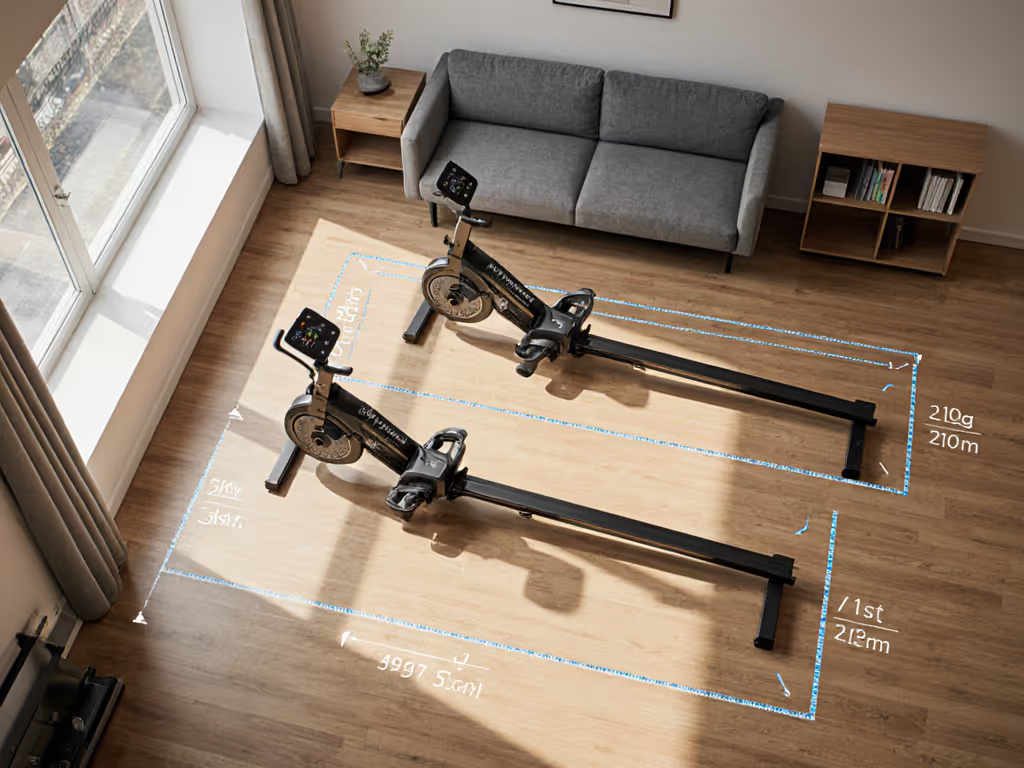
If you're evaluating a compact rower space comparison for an apartment or small home, "compact" has become a fuzzy marketing term that conflates folding capability, floor footprint, and storage convenience into one vague claim. In reality, the footprint when in use (the floor real estate your rower occupies during every session) is vastly different from its dimensions when folded away. This distinction matters because you're going to set up and break down maybe once, but you'll step around (or on) that footprint hundreds of times.[1] A machine that folds to 2 feet wide but sprawls 7 feet when extended isn't solving your space problem; it's deferring it.[1]
What separates a genuinely space-conscious purchase from a regrettable one is understanding your exact rower storage dimensions and matching them to your body, your building's floor type, and your workout cadence. The data exists: models publish specifications, users have measured machines in real homes, and the physics of resistance (air vs. magnetic vs. water) directly govern both noise transfer and vibration isolation risk on thin floors. You don't need influencer opinion; you need audit-grade clarity.
When set up and ready to row, compact models typically occupy 6 to 7 feet in length and 21 to 26 inches in width.[1][3] That's the working footprint. If your space is tighter (say, a corner nook or bedroom alcove), you'll need to know whether a model folds, stands, or stores vertically. For curated picks, see our apartment-ready compact rowers that balance footprint, storage, and stability.
The industry baseline is a standard rowing machine at 95 inches (about 7.9 feet) in length and 24 inches in width.[3][6] Compact models chip away at length more aggressively than width. Here's what the data shows:
Electromagnetic rowers (e.g., Hydrow Wave): 26.5" × 30" footprint, meaning these are genuinely minimal during use.[4] The trade-off is that they require power and often come bundled with app subscriptions ($30-45/month) that lock you into a single content ecosystem. Verify their Bluetooth FTMS (Fitness Machine Service) or ANT+ support before assuming you can export to Apple Health, Strava, or Garmin. To see which machines truly support open protocols, check our FTMS and ANT+ comparison.
Magnetic rowers (e.g., Fitness Reality 1000, ProGear 750): 37" to 43" rail length when extended, 39" to 53" long overall, 22" to 26.5" wide.[2] These are your open-protocol sweet spot (many ship with free companion apps and expose Bluetooth FTMS connectivity), which means your HR strap data, cadence metrics, and splits can flow to your wearables without forced subscriptions. Look for version numbers and API documentation; not all "Bluetooth-enabled" models implement the standard cleanly.
Air-resistance rowers (Concept2 and similar): 92-96" long, 22-24" wide.[5] These are heavier (57-123 lbs) and harder to move, but they're the gold standard for stroke consistency and data accuracy. They're also the most transparent about their resistance profile and maintenance requirements (no firmware surprises).
Water-resistance rowers: 85" long, 22.25" wide; weigh 66.5 lbs without water.[5] Visually stunning but require humidity control, occasional water replacement (usually annual), and careful floor protection. Footprint is moderate; noise is muted and meditative, but vibration can still travel through thin floors.
Open where it counts, bridged where compromise is acceptable, and that means prioritizing machines with open Bluetooth FTMS support and no forced app tiers before you worry about visual design.
When you're shopping for a folding compact rowing machine, the marketing photos show a sleek vertical silhouette. The reality often differs.[1] For real storage dimensions and fold testing, read our compact foldable rowers analysis.
Foldable models may shrink to 2 feet (24") wide when compressed, but they're not typically taller or shorter when folded, they just pivot down. The Fitness Reality 1000 folds easily, and the ProGear 750 stores with an adjustable rail, but both still demand floor space or a closet that can accommodate them upright. Verify height clearance before committing.
Vertical-storage machines (French Fitness WR80, some Life Fitness models) can store end-up at dramatically reduced footprints (as small as 40" × 22" × 27.5"), but this only works if you have a wall-facing corner and the wheels are stable.[8] Test stability in person if possible; a machine that tips during retrieval is worse than no machine.
Non-folding, ultra-lightweight models (32-39 lbs, e.g., some hydraulic or air-resistance rowers) are portable through narrow doorways and up stairs, but they may have lower weight capacity (250-300 lbs) and inferior stroke smoothness. They're not compact in footprint; they're compact in mass and maneuverability.
Measure your dedicated workout zone now. Tape on the floor works: map out 6 feet long and 26 inches wide, then walk around it. That's your baseline. Now ask yourself:
If you're committing to daily or near-daily rowing, an in-use footprint that eats 8% of your room is tolerable. If you're rowing 2-3 times per week and willing to unfold/fold each time, then a foldable machine makes sense. But if you dread the setup ritual, you'll skip workouts.
A firmware update once broke my paid training app mid-interval, leaving me scrambling to salvage the session. That night, I committed to rebuilding around open protocols (FTMS and ANT+ specifically), and I've mapped exactly which rowers talk cleanly to Health, Strava, and Garmin without forced subscriptions. The side effect: I now sandbox every ecosystem before recommending it. The lesson applies here: even a perfectly sized machine is useless if the friction of setup prevents you from using it.
The apartment rower footprint analysis often ignores fit. If you're 5'2" and your partner is 6'2", the rail length matters. Adjustable models like the ProGear 750 (37"-43" rail, 3 incline levels, accommodates 4.9-6.1 feet tall users) are rarer; most machines have fixed rails optimized for a narrow height range.[2] Tall users risk hitting the damper or rowing with an inefficient catch angle. Short users need a seat height that doesn't force them into a forward lean.
Always verify:
Footprint size is irrelevant if the machine doesn't fit your body. Test in-store when possible, or buy from a vendor with a 30-60 day return window.
Compact doesn't mean quiet. The machine's resistance type (air, magnetic, water, electromagnetic, hydraulic) governs noise and vibration signature, not its footprint. Compare measured dB and vibration data across popular models in our apartment noise tests. A compact magnetic rower on thin floors in a ground-floor apartment can transmit low-frequency rumble that wakes a neighbor below or a child napping nearby.
Your mitigation options:
The Fitness Reality 1000 is an editor's choice for compact machines.[2] Dimensions: 39" rail, folds easily, 250 lbs max capacity, accommodates users 4.9-6.6 feet tall, weighs around 54 lbs, and ships with a free Mycloud fitness app that supports Bluetooth connectivity.[2] The 14 levels of magnetic resistance mean quiet operation, and the 3.5" LCD display tracks the basics without demanding a tablet or subscription.
Critical note: Verify that your version ships with Bluetooth FTMS support. Older iterations of budget machines sometimes use proprietary Bluetooth or no wireless connectivity at all. Check the product specification sheet or contact the vendor before purchase to confirm protocol version. This machine bridges where it counts (open connectivity), but don't assume it; audit the fine print.
The ProGear 750 trades some footprint efficiency (37"-43" rail) for ergonomic flexibility.[2] It has 3 adjustable rowing positions, accommodates users 4.9-6.1 feet tall, and is marketed as a multi-function exercise machine, meaning some users may leverage it beyond rowing. The 220 lbs max capacity and hydraulic design keep it lightweight and portable.
Trade-off: Hydraulic resistance (often 1-2 pistons) tends to wear faster than magnetic or air systems. The stroke feel can be less fluid, and noise from the piston pump may be higher than magnetic alternatives. Real-world user reports (check verified reviews on retailer sites) vary widely on comfort during 30+ minute sessions.
The Hydrow Wave boasts a 26.5" × 30" footprint (genuinely minimal).[4] Electromagnetic resistance, no moving air or water parts, whisper-quiet operation. It includes a 16" HD touchscreen and comes bundled with the Hydrow app ($35-45/month subscription for on-demand coaching content).
Caveat: The Hydrow app is closed. Workouts, metrics, and coaching content are proprietary. There is no clear Bluetooth FTMS or ANT+ export pathway; Hydrow does support some third-party integrations (Apple Health, Strava) but only for summary data, not granular metrics like splits and power curves. If your goal is data autonomy and cross-app flexibility, this machine contradicts that priority despite its attractive footprint.
Verify the current app version and integration roadmap before committing. Subscription terms and available export formats change; don't assume future feature parity.
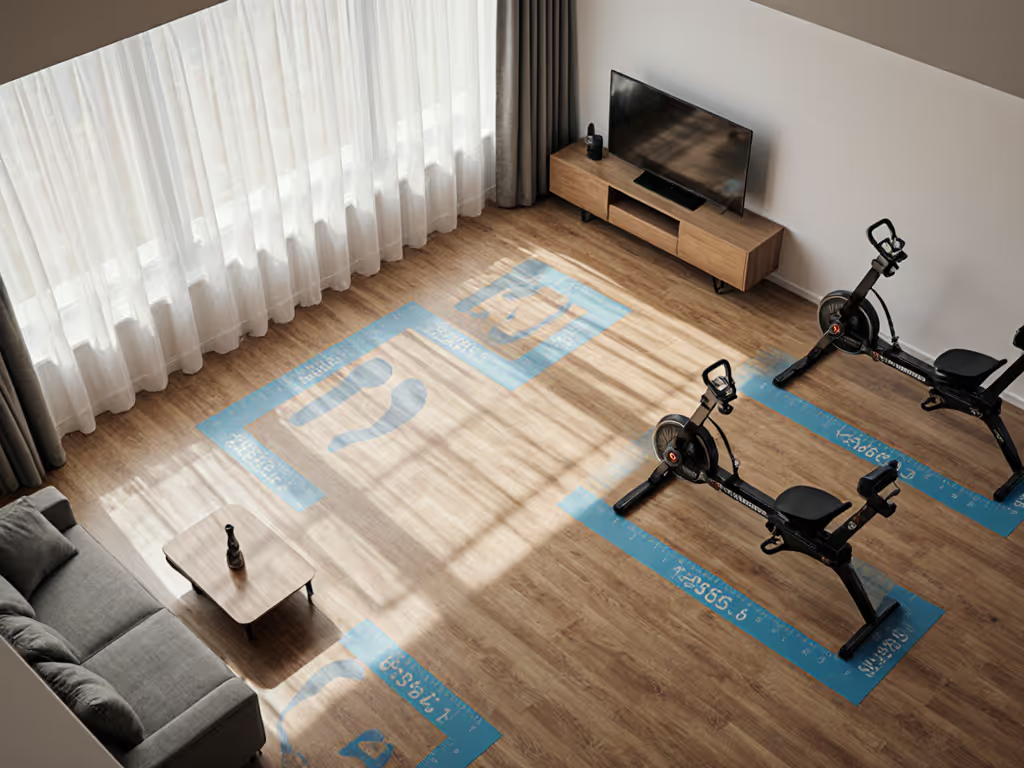
Daily-use machines (magnetic, air, water): Keep unfolded in a dedicated corner or nook; embrace the footprint as part of your home aesthetic. A compact machine that lives in a visible corner becomes a visual cue for habit formation, not clutter.
Occasional-use machines: Invest in a folding or vertical-storage model with quality wheels. Test the fold/unfold motion 10 times in the store; if it's awkward, you'll resist it.
Couples sharing space: A machine that accommodates a range of heights (e.g., ProGear 750, Fitness Reality 1000) reduces the need for two machines. Verify seat adjustability and rail geometry; if one partner is significantly taller, data accuracy and joint comfort may suffer on a sub-optimal fit.
Apartment dwellers on thin floors: Pair any machine (regardless of footprint) with a 3/8" to 1/2" thick isolation mat. Don't skimp; cheap mats compress and lose effectiveness within 6 months.
Vendor claims like "whisper quiet" or "space-saving design" are not measurements. Decibel (dB) ratings, vibration transmission tests, and user reviews from verified purchasers are. Here's how to vet:
Decibel specs: Reputable brands publish dB measurements. A magnetic rower typically runs 65-75 dB; air rowers are 75-85 dB; water rowers are 65-70 dB. Compare apples to apples, and remember that dB is logarithmic (a 10 dB increase is perceived as roughly twice as loud).
Footprint specs: Verify manufacturer dimensions (length × width × height) on the product spec sheet, not marketing photography. Cross-check against independent reviews that measure machines in real homes.
Weight capacity and user height range: These are hard constraints, not suggestions. Buying a 250 lbs capacity rower for a 280 lbs user is a guaranteed failure. Similarly, forcing a 6'4" user onto a machine rated for 6'1" max will result in injury.
App connectivity claims: Ask the vendor directly: "Does this model support Bluetooth FTMS or ANT+ export to Apple Health, Strava, or Garmin?" Get the answer in writing. "Bluetooth-enabled" is not the same as "FTMS-compatible"; many machines use proprietary Bluetooth profiles that don't interoperate with standard wearables.
Warranty length: A 5-10 year frame warranty (common on air and water rowers) signals confidence in durability. A 1 year limited-use warranty (some budget magnetic models) signals higher failure risk or shorter expected lifespan. Factor this into long-term cost-per-use math.
Your next step is to:
Define your non-negotiables: footprint size, user height range, noise tolerance, app flexibility, budget, and storage method.
Create a decision matrix: List 3-5 machines that meet your footprint and fit criteria; map their Bluetooth/ANT+ support, warranty, and price side by side. A spreadsheet with columns for specs, pros, cons, and protocol version will keep you grounded against marketing claims.
Test in person (or buy with a return window): If possible, visit a local gym or fitness showroom and row 15-20 minutes on your top contenders. Feel the resistance, test the seat height, and check for handle hotspots or knee bind. A footprint that looks perfect on paper but causes shoulder pain on a 40-minute session is a waste.
Audit connectivity before checkout: For any machine with a companion app, review the app store version number, user reviews citing connectivity issues, and the vendor's support response time. A machine that can't pair reliably with your Apple Watch or HR strap defeats the purpose of home training data autonomy.
Plan your isolation and vibration strategy: Measure floor compliance, consult your building manager about noise policies, and budget for a quality mat if needed. The machine's footprint matters far less than the friction between you and your neighbors.
Your compact rower should vanish into your life, not in size, but in friction. Open where it counts, bridged where compromise is acceptable. A well-matched machine with clear footprint data, reliable connectivity, and ergonomic fit will become as much a part of your daily rhythm as your coffee maker. A poorly sized one will collect dust in a corner and fuel buyer's remorse. Choose the former.