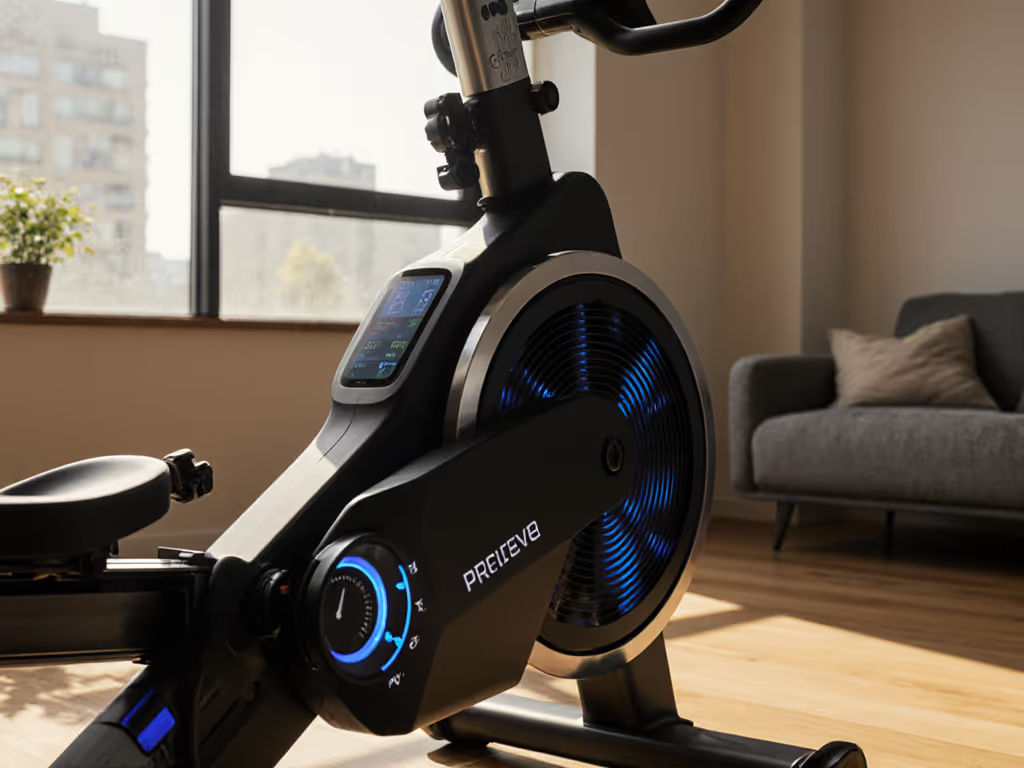
Training, Technique & Benefits
Rowing Drag Factor: Precision Over Damper Settings
24th Apr•11 min read
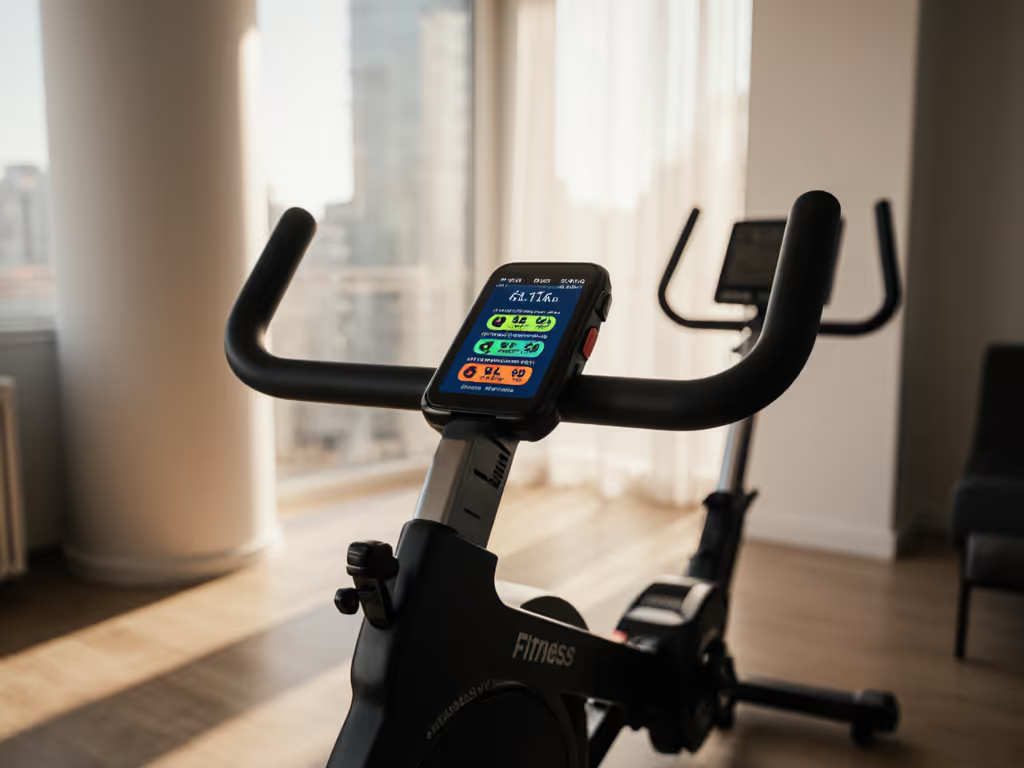
Rowing heart rate zones and rowing heart rate training are often marketed as the solution to efficient on-water or on-machine work, yet most rowers receive vague guidance, conflicting zone formulas, and apps that promise precision without transparency. The reality is messier. Your zones depend on your max heart rate (which varies by measurement method), your training history, and the specific demands rowing places on your cardiovascular system. I've spent years taking the same skeptical, measurement-first approach to heart rate training that I apply to acoustic isolation: define the system, measure it repeatably, and flag the gaps between what's promised and what's real.
Rowing heart rate zones divide your aerobic spectrum into intensity bands, typically 5 to 6 zones ranging from easy base building to all-out efforts. The principle is sound: training at specific intensities triggers different adaptations (fat oxidation in Zone 1-2, threshold work in Zones 4-5, VO2 work in Zone 5-6). But the zones are only as good as the numbers they're built on.
Most zone systems start with max heart rate or lactate threshold. A fact confirmed by sports physiology research is that predicted max HR (220 - age) carries an error margin of ±10-15 bpm for many individuals. That error alone can shift your entire zone distribution, turning a Zone 3 steady row into a Zone 2 easy row, or vice versa, depending on which formula you pick.
The three major calculation approaches are:
Each has trade-offs that most marketing material glosses over.
Your options rank like this for home rowers: Before testing, make sure your device is up to the task—see our rowing HR monitor accuracy comparison.
Field testing in your own environment (same machine, same time of day, same HR strap or wearable) gives you repeatable data you can trust.
Using a tested max (example: 185 bpm), typical zones are:
| Zone | % of Max | HR Range | Purpose |
|---|---|---|---|
| 1 | 50-60% | 92-111 bpm | Recovery, easy base |
| 2 | 60-70% | 111-130 bpm | Aerobic base building |
| 3 | 70-80% | 130-148 bpm | Tempo, sweet spot |
| 4 | 80-90% | 148-167 bpm | Threshold, steady hard |
| 5 | 90-100% | 167-185 bpm | VO2 max, high intensity |
If using Karvonen (Resting HR = 60 bpm, Max = 185 bpm):
Notice the difference? Karvonen zones are higher in HR for the same zone number because they account for the gap between rest and max. Pick one method and stick with it so your training log stays consistent.
One common mistake is applying a running-trained max HR or zone structure to rowing. The discrepancy stems from two factors:
The practical implication: Do not copy a running max HR to rowing zones. Test rowing-specific max or accept a 5-10% downward adjustment if you must reuse a running value. Apps that assume universal max HR across sports compound this error silently. For a deeper dive into rowing vs running cardio differences, including impact and muscle engagement, check this guide.
Rather than vague "Zone 3 row for 30 minutes," here are tested frameworks:
Each protocol is testable: measure average HR for each interval, log it, and track HR stability week to week. If your HR is creeping up for the same wattage or pace, fatigue or detraining is showing. That's actionable data.
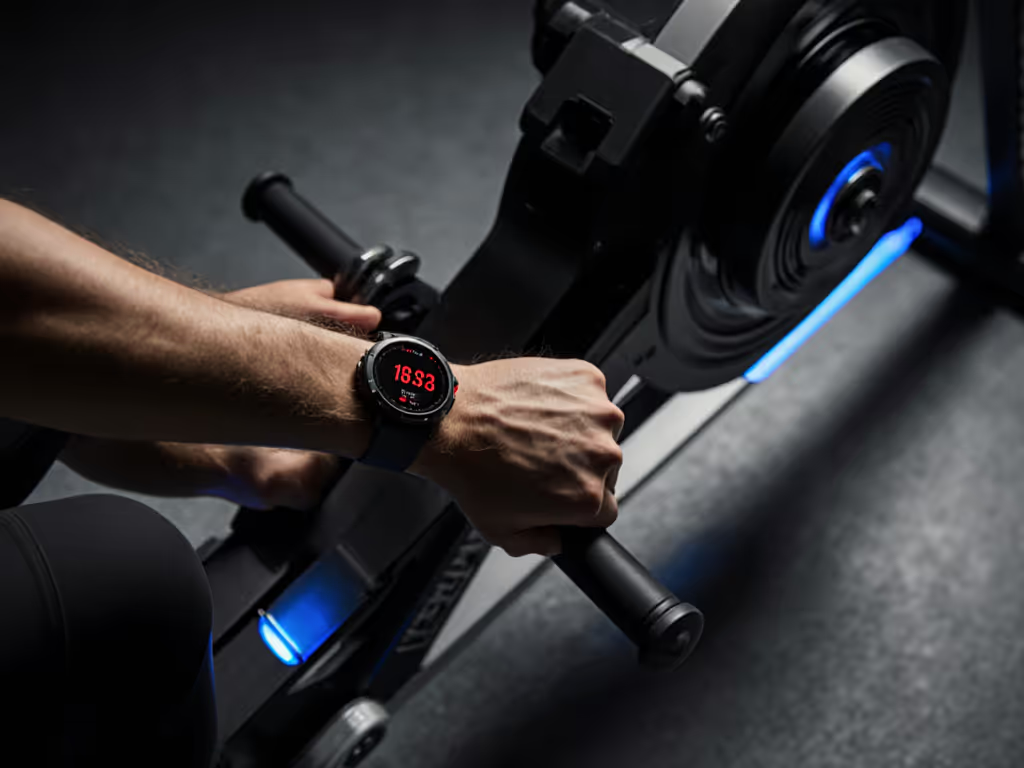
There is no single "optimal" HR for rowing, it's contextual.
The catch: Jumping between zones without a plan is chaos. Most rowers benefit from 8-12 weeks of one focus (base, threshold, or VO2) before rotating. Apps that auto-generate random "workout recommendations" often violate this principle, leaving you nowhere fast.
Just as I've calibrated HR sensors against reference monitors to catch drift, the same rigor applies to your rowing heart rate training data. Here's a repeatable protocol:
Heart rate training is a system problem: athlete, equipment, environment, and interpretation all matter. Ignore one, and your zones become fiction.
Rowing heart rate zones are a legitimate tool for structuring training, but only if your zones are calculated from your tested max HR and applied consistently within a multi-week plan. Avoid:
Do this instead: Field test your rowing max HR, pick one zone formula (% max or Karvonen), build an 8-12 week block (base -> threshold -> VO2 or vice versa), and log repeatably. Check HR strap accuracy against your watch. Adjust week-to-week based on data, not feel alone.
Your zones won't be perfect; no formula is. But they'll be yours, repeatable, and measurable. That's the difference between a training system and marketing noise. Start with one field test this week, pick your zones next week, and commit to one 8-week protocol before changing course. Track everything. The system reveals itself through data.