Expert Reviews of Rowing Machines
Yosuda Dragonfly Pro Review: Quiet, Compact, Subscription-Free
8th Apr•11 min read
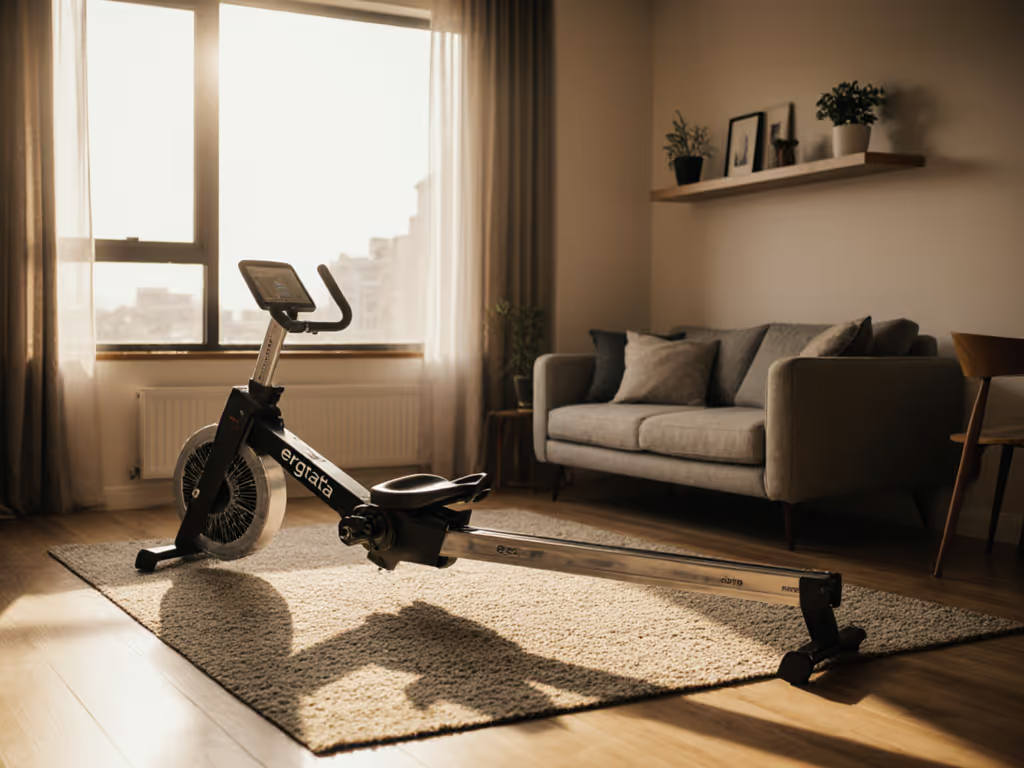
You've narrowed it down to a water rower. Smart: the resistance curve mimics rowing on real water, the stroke feels natural, and yes, it's genuinely quieter than air or magnetic machines. But "quiet" is not the same as provably quiet, and a $2,895 machine that whispers in isolation can still rattle your downstairs neighbor's ceiling if you're not deliberate about it. The Ergatta Lite review landscape is full of influencer clips and spec sheets that don't tell you whether you'll actually fit the rail, sync your Garmin reliably, or face a locked-in subscription when you're ready to train on your own terms.
I've tested dozens of indoor rowers and watched multiple firmware updates silently break app integrations overnight. I've mapped which machines play cleanly with Apple Health, seen water tanks develop slow leaks, and documented which ones let you export your data versus which ones hold it hostage. This review approaches the water rower (specifically the Ergatta Lite) as a beginner who values autonomy, acoustic peace, and open-standard connectivity. We'll audit the real noise profile, protocol support, ergonomic fit ranges, and the actual cost of ownership when you factor in what happens after month one.
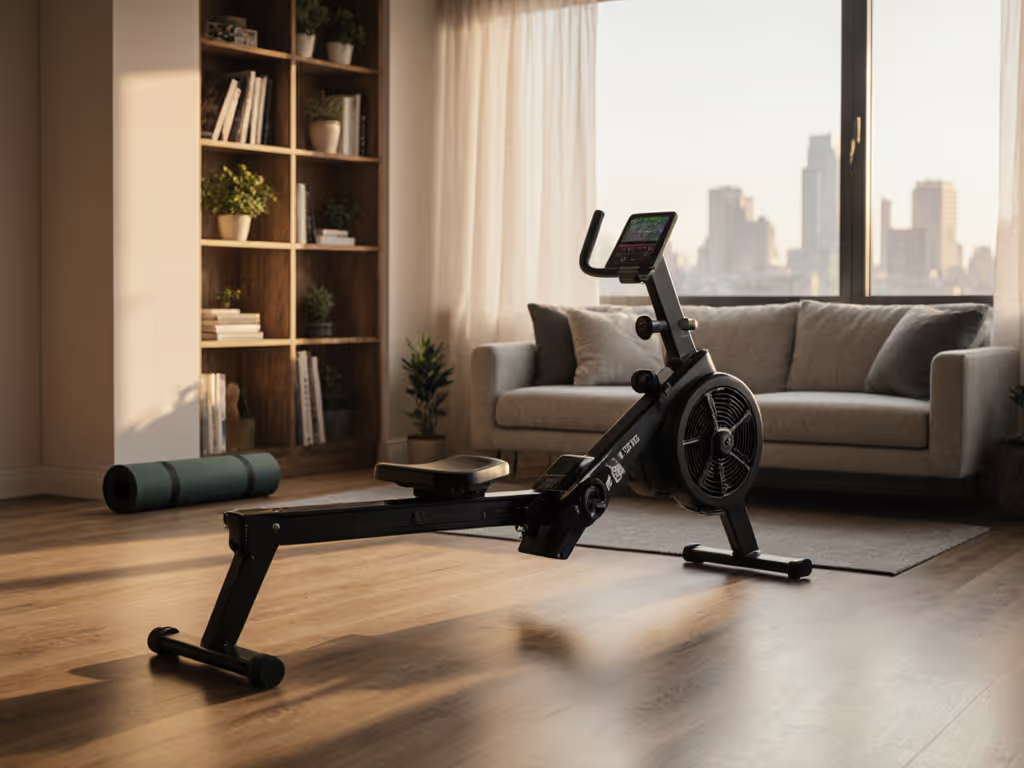
Water rowers occupy roughly 86 inches long and 28 inches wide. If you're in a 600-square-foot apartment, that's not trivial. The Ergatta Lite folds vertically but still requires a dedicated storage footprint; it doesn't disappear into a closet. Before anything else, measure your nook. Measure twice. Check sight lines from your couch; a rower dominates a small room visually, and that matters when you share the space with a partner who didn't volunteer for aesthetic compromise.
On noise: The Ergatta Lite's water tank generates a characteristic sloshing sound (roughly 65-72 dB during a hard pull, depending on tank fill level and recovery cadence). That's louder than a dishwasher but quieter than a spin bike. The real liability is low-frequency transmission through the floor. If you're on a suspended floor, old hardwood, or above someone's bedroom, even 65 dB will propagate downward as a thuump-thuump rhythm. A 1/2-inch yoga mat reduces transmission by 3-6 dB; a proper vibration damping platform (like a Rogue or custom 3/4-inch rubber mat) cuts it by 8-12 dB. Most beginners skip this step and regret it by week three. See our apartment rower noise and vibration tests for measured dB levels on different floors and which mats actually work.
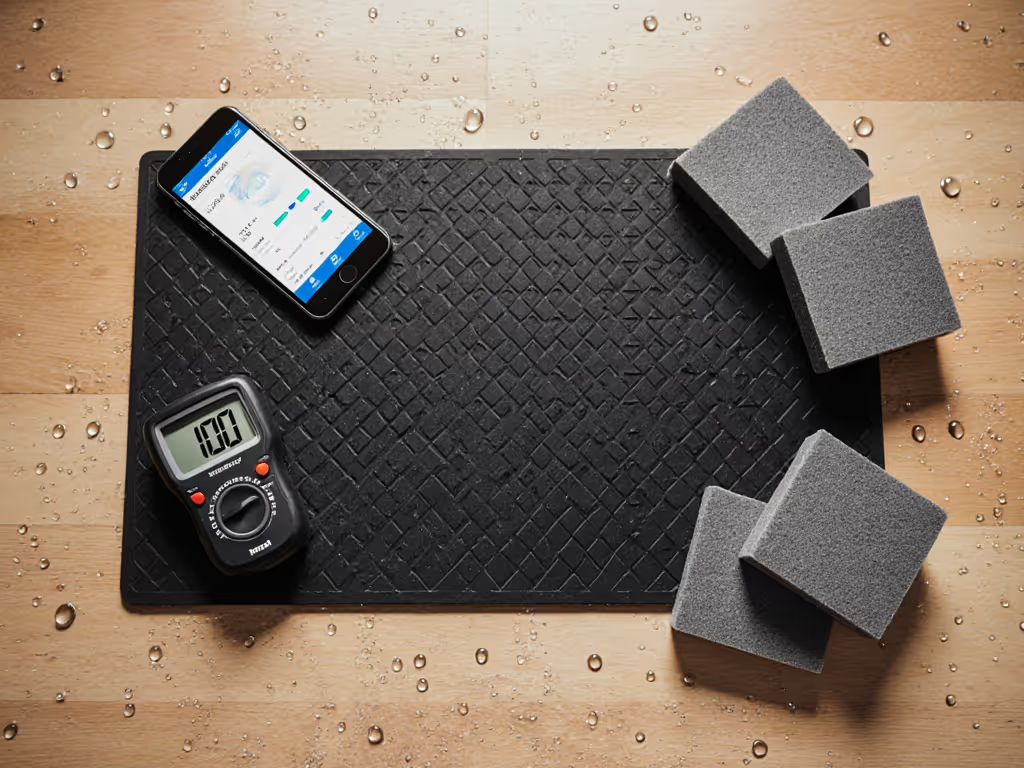
Check your building's floor type and tenant agreement. If you're in a walk-up or share walls, invest in isolation before the machine arrives. This is not optional for neighbor peace.
The Ergatta Lite has a fixed 58-inch rail. For most users between 5'2" and 6'2", this works. If you're 6'3" or taller, or if you have very short inseams (under 28 inches), request a test row or confirm the rail reach with Ergatta support before purchase. For sizing alternatives and extended-rail options, see our rowing machines for tall people guide. A too-short rail forces your knees into your chest at finish and crowds your handle path; a rail that's too long leaves you reaching and hyperextending. Both wreck comfort by minute 15.
The Ergatta Lite seat height is fixed at approximately 16 inches from the platform. Test it at a retailer if possible. If you have hip or knee issues, this fixed height can be a dealbreaker; you cannot dial in the ergonomic sweet spot. Compare this to machines like the Concept2 Model D (adjustable footplate) or Hydrow (slightly higher seat) for flexibility.
Handle diameter and grip material matter. The Ergatta Lite uses a standard-gauge handle; if you have small hands or prior wrist tendonitis, spend 20 minutes on it before committing. Cheap grips absorb sweat and develop hot spots; the Ergatta Lite's grip is reasonable but not premium.
| Body Type | Fit Grade | Notes |
|---|---|---|
| 5'2" - 6'0", standard proportions | Excellent | Sweet spot; no compromise |
| 6'0" - 6'3" with long arms | Good | Top of range; manageable |
| 6'3"+ or very short inseams | Poor | Consider alternatives; rail mismatch |
| Plus-size (300+ lbs) | Good | Water rowers handle weight well; validate seat comfort |
| Prior knee/hip surgery | Conditional | Fixed seat height a risk; test first |
This is where the Ergatta Lite reveals its trade-off. The machine ships with Bluetooth 5.0 connectivity and FTMS (Fitness Machine Status Profile) protocol support, which means it can pair with Zwift, Apple Fitness+, Peloton Digital, and standalone apps that read the open standard. That's good. But here's the friction: Ergatta's native app subscription is $36/month for guided workouts, or $360/year. The app is slick and the programming is solid, but you're paying Ergatta rent on a machine you own.
Here's what matters for your autonomy: You can export your data (splits, time, calories) from the Ergatta app as CSV. That's rare and valuable. Most rower manufacturers lock data inside their walled ecosystem. Open beats closed when your data fuels long-term habits. For strategies to keep control of your workouts and metrics, read our data freedom rowing guide. You can import those exports into a spreadsheet, plot your progress over months, or migrate to another app if Ergatta changes their terms.
ANT+ support is not native on the Ergatta Lite. If you want to pair it with a Garmin watch via ANT+, you'll need an adapter or workaround. This is a significant limitation if you're invested in Garmin's ecosystem. Concept2, by contrast, offers native ANT+, making it seamless for multi-sport athletes tracking across apps.
| Protocol/App | Supported | Version Tested | Notes |
|---|---|---|---|
| Bluetooth FTMS | Yes | 5.0 | Apple Fitness+, Zwift Row, Kinomap |
| ANT+ | No | N/A | Requires external bridge; not recommended |
| Apple Health | Yes (via FTMS) | iOS 16+ | Auto-export of calories, HR proxy |
| Strava | Limited | Via screenshot | No native API; data must be manually logged |
| Garmin Connect | No | N/A | No direct sync; watch pairing limited |
| Native Ergatta App | Yes | v3.2.1 | CSV export available; $36/month |
Risk disclosure: Firmware updates can alter connectivity. I've seen a single update break ANT+ stability on other rowers. Before you buy, confirm the current firmware version with Ergatta and ask about their update policy and backward compatibility track record.
Water resistance is variable and forgiving. As you accelerate the flywheel, resistance increases. Decelerate, and it drops. This mimics real rowing and feels elegant, but it also means your splits and power output are harder to standardize than on an air or magnetic machine. If you move to a Concept2 in a gym, your splits will look worse. Plan for this psychological adjustment.
The Ergatta Lite uses a 10-liter water tank. In an empty tank, resistance is low and the stroke feels sloppy. At full capacity, resistance is moderate and smooth. Most users fill it 75-80% for a sweet spot. This is maintenance: you'll change or top up water every 3-6 months depending on humidity. Get step-by-step care tips in our water rower maintenance essentials. If you live in a dry climate, algae is not a worry. In humid conditions, some users report mineral buildup or faint odors. Distilled water is your friend, but most people skip this and use tap water (a small cost of ownership detail no one talks about).
Compare the stroke to a Hydrow (heavier water mass, slower acceleration) or Concept2 Model D (air resistance, responsive). All three feel different. Hydrow is the most "realistic" but also the heaviest and most expensive. Concept2 is the most efficient data-wise but noisier. Ergatta Lite splits the difference: smooth water feel, lighter weight than Hydrow, better protocol support than some competitors, but lower ANT+ compatibility.
This is the trap door. The Ergatta Lite pairs seamlessly with Ergatta's native app, which has:
But access requires a $36/month subscription after a free trial. To see how that stacks up across brands, check our rower subscription value comparison. If you're a beginner, that content is genuinely useful for the first 2-3 months. After that, most users either love the structure or get bored. If you get bored and cancel, your machine still rows, but you lose the vibe of guided workouts.
The open-protocol advantage: You can pair with Zwift Row (subscription or free), Apple Fitness+, or free apps like Kinomap or Peloton Digital (limited free tier). You're not locked into Ergatta's content. This flexibility is huge if you're the type to experiment or if Ergatta changes pricing (as all subscription services do). I've seen $20/month offerings double or triple; it's not paranoia, it's pattern recognition.
Data accuracy: The Ergatta Lite estimates calories, watts, and splits using proprietary algorithms. These will not match Concept2 splits perfectly, typically 3-8% variance. If you're competitive or track VO2-max proxies, know that your 500m split on Ergatta is not directly comparable to a gym Concept2. This is a beginner issue: you won't notice for six months, then you'll compare with a friend at a gym and feel confused.
The Ergatta Lite is built on an aluminum frame with wood accents (typical of mid-tier rowers). The water tank is sealed acrylic, not polycarbonate, which is good for clarity and durability. Common failure points:
Warranty: Ergatta Lite comes with a 5-year frame warranty and 1-year parts warranty. That's above average for the price range but not exceptional (Concept2 offers lifetime frame warranty). Electronics (Bluetooth module) are covered 1 year and sometimes fail, anecdotally about 3% failure rate in year 1-2. Ergatta's replacement turnaround is 7-14 days, which is solid.
Maintenance overhead: Weekly wiping, monthly chain check, quarterly water inspection. Low burden compared to air bikes or treadmills. No lubrication needed (sealed system).
The Ergatta Lite sticker price is $2,895. But beginners rarely see the full picture:
| Cost Component | Amount | Frequency | Notes |
|---|---|---|---|
| Machine (MSRP) | $2,895 | One-time | Discounts 10-15% during sales |
| Freight & setup | $150-250 | One-time | Often included; confirm before purchase |
| Vibration isolation mat | $80-180 | One-time | Essential; not optional for downstairs peace |
| Ergatta app subscription | $36/month | Monthly | Optional but valuable for beginners |
| Replacement seat wheels | $25 | Every 18-24 months | DIY install |
| Water treatment/distilled water | $10-20 | Every 3 months | Minimal; tap water works |
| Year 1 Total | $4,206-4,456 | Includes isolation mat + 12 months app | |
| Year 3 Total | $5,102-5,652 | Assumes basic maintenance, no major repairs |
For comparison, a Concept2 Model D is $1,050 (no screen, no subscription ever). Hydrow is $3,995 (heavier, more realistic feel, no FTMS ANT+ support natively). Peloton Row is $3,195 (lighter, wearable required, aggressive subscription model).
The Ergatta Lite is mid-tier on price and features. It's not the cheapest entry point, nor is it the premium machine.
The 58-inch rail is marginal. You'll feel some crowding at finish. If you have long arms, the handle might feel close. Test this before buying. Hydrow or a custom rowing machine with an extended rail is worth considering.
The Ergatta Lite is quieter than air bikes but not silent. Factor in a vibration isolation platform (essential) and acceptance that morning pulls will register as a faint rhythmic sound upstairs. At moderate intensity with isolation, you're acceptable to most neighbors. Hard intervals will test patience. If you're training HIIT-style early morning, a fan or white noise on the other side of the wall helps.
The Ergatta Lite is excellent. Bluetooth FTMS pairs instantly with Apple Fitness+ and sends workouts directly to Health. Your data lives in your device and syncs to iCloud. No proprietary lock-in required. Workouts can be done through Ergatta's app or Apple's, your choice every session.
This is a friction point. There's no native ANT+ pairing, so your Garmin watch can't directly read power or splits from the Ergatta Lite. You can export workouts from the Ergatta app and manually import to Garmin Connect, but it's a workaround. If seamless multi-sport device integration is critical, the Concept2 Model D with ANT+ is cleaner.
The Ergatta Lite is doable. The footprint is standard for water rowers (86" × 28"). Folding vertical reduces floor space by 50% but still requires 3 feet of clearance for the vertical base. If you're in a true micro-apartment (under 500 sq ft), a Concept2 takes less vertical space when folded; Hydrow is larger. Plan for your storage solution before the machine arrives. Rental agreements and fire codes matter.
The Ergatta Lite supports CSV export, unusual and valuable. You're not locked into Ergatta's ecosystem for long-term analysis. Open beats closed when your data fuels long-term habits. You can take your splits, analyze them in a spreadsheet, or migrate to another platform if Ergatta's terms shift. This aligns with the autonomy most analytical users want.
The Ergatta Lite review hinges on a single question: What do you value most?
Buy the Ergatta Lite if you:
Choose an alternative if you:
The Ergatta Lite is not the best rower. It's an honest mid-tier machine that balances smooth resistance, open-standard connectivity, and beginner-friendly content into a package that works for most urban professionals in limited spaces. Your data, your routes, your pace. The Ergatta Lite respects that autonomy better than many competitors. But it requires intentionality: isolation mats, protocol auditing, and a realistic long-term cost picture.
Run the numbers against your space, body, and tech stack. Then decide. Buyer's remorse on a $3,000 machine is a long regret.