Expert Reviews of Rowing Machines
Quiet Water Rower for Beginners: Ergatta Lite Review
2nd May•14 min read
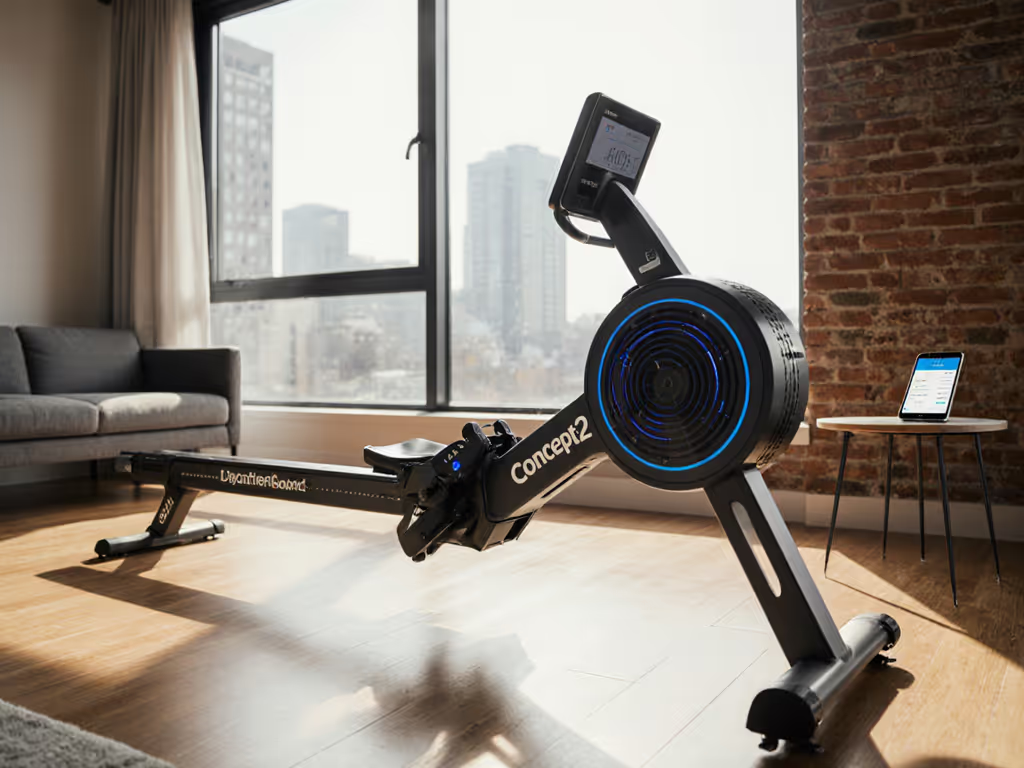
The Concept2 RowErg Model D review is worth your time because this machine represents a rarer combination than most fitness brands offer: uncompromising build quality paired with open protocols that let your data stay portable across Apple Health, Strava, and Garmin. For renters and small-space dwellers skeptical of vendor lock-in, the Model D's PM5 Performance Monitor stands apart because it prioritizes Bluetooth Frequency Transmission Service (FTMS) and ANT+ connectivity, not a walled subscription garden. In an era where firmware updates can silently strand your paid training apps mid-interval, durability and data autonomy matter as much as horsepower.
This review unpacks whether the Model D's legendary reputation translates to real advantage for your specific body, floor type, and app ecosystem (and where its design decisions create trade-offs you should anticipate).
The Concept2 RowErg Model D achieves its reputation for longevity through material choices and manufacturing discipline. The frame combines aluminum front legs with steel rear legs, creating a hybrid approach that balances weight and rigidity. The machine weighs 57 lb (standard legs) or 68 lb (tall legs) and supports users up to 500 lb under Concept2's internal testing (or 300 lb under the stricter European Stationary Fitness Equipment Testing Standard EN 20957-7), depending on regulatory context.
The drive system uses a nickel-plated steel chain housed in a partially enclosed chain guard, a design that reduces exposure to dust while keeping maintenance straightforward. For step-by-step upkeep of chains, rails, and bearings on air rowers, see our Air Rower Maintenance guide. Unlike sealed cartridge systems that trap debris, this semi-open design means you can visually inspect wear and lubricate the chain with standard silicone spray or light oil (skills within reach of any user). The PM5 monitor draws power from the spinning flywheel during use, supplemented by two D cell batteries, so you're not reliant on plug-in power or rechargeable cells that age predictably slowly.
The damper is mechanical: a spiral vane that adjusts air intake from levels 1-10, mimicking bike gears. Mechanical dampers have no plastic seals to degrade or firmware to corrupt, making them inherently resilient. The seat rides on an aluminum rail with stainless steel track, a combination that resists corrosion in humid apartments and sheds moisture quickly in basements.
Real durability, however, depends on assembly quality and parts availability. Concept2 assembles the Model D in the USA and publishes spare parts lists with lead times on its support site, a transparency rare in the indoor rower market. The 5-year frame warranty reflects confidence, though commercial rowers in gym settings often outlast ten years of weekly use before bearing wear necessitates a rail replacement (a $200-$300 service versus $3,000+ for a new machine).
The Concept2 PM5 monitor review reveals why this machine resonates with data-conscious users who've been burned by closed ecosystems. The PM5 ships with Bluetooth Low Energy (BLE) support conforming to FTMS (Fitness Machine Over Bluetooth Low Energy) and optional ANT+ connectivity via a USB adapter, two open standards that let you stream live metrics to apps beyond Concept2's own ecosystem.
The monitor's onboard data includes:
Crucially, the PM5 does not gatekeep your metrics behind a subscription paywall. If open standards and app compatibility are priorities, compare leading models in our Data Freedom Rowing Machines guide. Concept2 offers the free ErgData companion app for iOS and Android, which logs workouts and syncs via USB or cloud backup, but using the PM5 without the app is entirely functional. Your data exports to CSV or is visible on the monitor's LCD screen immediately after each session.
This architecture prevents the scenario many rower owners face: a paid training app goes out of business, or Concept2 releases a firmware update that breaks compatibility, and your historical data siloes. Bluetooth FTMS support means your PM5 metrics can feed directly into third-party apps like Kinomap (scenic row workouts), Zwift Row (social racing), and Apple Fitness+ without requiring a gateway app. Your data, your routes, your pace. ANT+ support extends compatibility to Garmin watches and some cycling apps, though you'll need the USB ANT+ stick (sold separately) to enable it.
The display is backlit, readable in dim morning light, and the adjustable monitor arm lets you position it for sightlines without neck strain during your stroke. Battery life is effectively unlimited during use (the flywheel powers the monitor) and standby drain is negligible over months of inactivity, a practical advantage over tablets or rechargeable displays that slowly drain in storage.
The PM5's Bluetooth FTMS implementation is solid but not flawless. Pairing with a Bluetooth chest strap (Polar H10, Garmin HRM-Pro, or Wahoo TICKR) is reliable across iOS and Android devices at typical in-home distances (10+ feet). However, some users report occasional dropouts if the strap battery nears depletion or if a 2.4 GHz WiFi router operates on the same channel. This is not a Concept2-specific flaw (it's inherent to crowded RF environments) but worth noting if you live in a dense apartment building.
The FTMS data stream (distance, watts, heart rate) syncs to compatible apps with a ~1-second lag, acceptable for interval workouts but noticeably behind real-time if you're comparing to on-screen displays. This is a protocol-level reality, not a PM5 deficiency.
The Concept2 Model D performance is defined by air resistance and damper control. The flywheel responds immediately to your force input, creating a natural, momentum-driven feel that mimics water or wind rowers more closely than magnetic resistance. Higher damper settings (7-10) require more energy to accelerate the flywheel but feel "heavier" once it's spinning, suiting powerful athletes or strength-endurance blocks. Lower settings (1-5) demand quick, snappy pulls, ideal for speed work and lighter users.
Recommended damper settings for most users are 3-5, a middle ground that balances smooth acceleration with effort proportional to intent. New to airflow control? Read our damper setting explainer to dial in the right feel. Beginners often start at 3 and adjust by ear; there's no penalty for changing it mid-session.
Split times (500m pace) are accurate to within ±0.5 seconds of Concept2's standard testing ergometer, a critical detail for rowers who train against Concept2 benchmark times (common in rowing clubs and CrossFit boxes). This traceability is why competitive rowers and coaches trust Concept2 over brands with proprietary algorithms: your 1:50 split on a Model D is directly comparable to a Model D in a gym 500 miles away.
One of the most underestimated pain points for rower buyers is fit. The Model D's monorail is 54 inches long, accommodating inseams up to 38 inches (roughly 6'2" average height) without compromise. Users taller than that may require an extra-long monorail, a $300+ retrofit available from Concept2 (an important detail if you're 6'4" or taller). For more fit tips and model options for long inseams, see our guide for tall rowers. The standard seat height is 14 inches; the tall-leg variant raises it to 20 inches. A higher seat reduces knee bend at catch (the start of the drive), helpful for users with limited hip mobility or knee pain, but is not required for taller users. Instead, it's a comfort option for users with shorter inseams who find the 14-inch seat too low relative to their hip anatomy.
Footrests are adjustable straps, not fixed pedals, allowing you to dial in position for shoe sizes from roughly size 5 to 14. The handle is ergonomic with a 10-degree bend designed to support a neutral wrist and forearm throughout the stroke. Seat comfort is often a sticking point: the Model D uses a curved foam seat with a hard plastic shell underneath. Some users find it supportive for 20-30 minute sessions; others prefer the memory foam aftermarket seat covers ($30-$50) for longer endurance rows. This is personal, but the good news is the seat can be replaced without tools or replacement part costs.
The Model D's noise profile is frequently misrepresented as "whisper quiet," a claim that deserves scrutiny. Air-resistance rowers are inherently quieter than magnetic or water rowers in the mid-frequency range (200-500 Hz), but they produce audible fan noise and chain clinking on each stroke. Independent testing suggests the Model D operates at approximately 75-80 dB at the user's ear, comparable to conversational speech, not silent.
Floor vibration is the second concern. The chain drive and seat carriage create low-frequency vibration (below 100 Hz) that transmits through wooden floors, particularly on older buildings with flexible joists. Renters on second or third floors with thin subfloors often hear complaints downstairs. Solutions include:
A 200 lb user on an isolation pad can reduce transmitted vibration by 40-60% versus bare floor, though total elimination is impossible. See model-by-model decibel and vibration tests in our apartment rowing noise comparison. This is worth testing in-situ before purchase if your building has known sensitivity to low-frequency transmission.
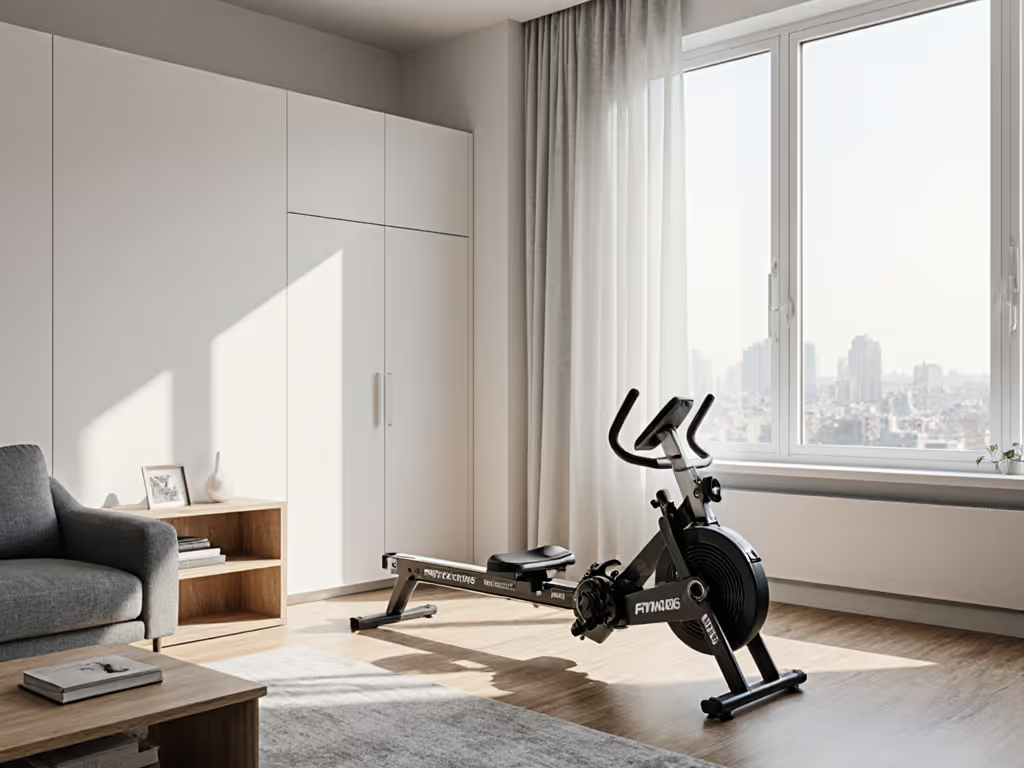
The Model D separates into two pieces using a tool-free framelock mechanism, reducing stored dimensions to approximately 25" × 33" × 54". For apartments, this is meaningful: you can store it upright in a closet or behind a sofa if assembled, and disassembled it fits in many walk-up stairwells more easily than a water rower. Assembly requires only eight screws and takes 15-20 minutes with basic tools. Caster wheels on the front feet allow you to roll the fully assembled machine into position without lifting.
Freight delivery is a consideration: many retailers ship via standard carrier (UPS, FedEx, or freight), which can result in long delivery windows and, occasionally, damage in transit. Concept2 does not typically ship direct to consumers, so you're buying through a third-party retailer. Verify return policies and whether the retailer will handle return freight (critical for 57 lb rowers) before purchase.
The Concept2 Model D review inevitably invites comparison to NordicTrack, Hydrow, and magnetic-resistance brands like WaterRower. Here's why the Model D remains a reference standard:
Concept2 advantages:
Trade-offs:
If your primary concern is open-source data, durability, and transparent compatibility, the Model D leads. If you prioritize aesthetic design or integrated content, premium water rowers (Hydrow, Waterrower) or NordicTrack's connected machines may align better, though those trade flexibility for lock-in.
The PM5's ability to sync workouts across platforms is a cornerstone of long-term usability. Here's how to maximize it:
FTMS (Bluetooth) pathway:
Connect via Bluetooth to Kinomap, Zwift Row, or Apple Fitness+ directly; metrics stream in real time and are logged by those apps independently. This is the most flexible route: your rower becomes a "dumb" sensor, and apps own your data presentation.
ErgData (Concept2 native):
The free ErgData app (iOS, Android) logs workouts, calculates rolling averages, and uploads to Concept2's cloud. You can then export CSV files or API-link to third-party platforms like Training Peaks or TrainHeroics. This is useful if you're building a detailed training log.
ANT+ pathway:
With the USB ANT+ stick ($40), the PM5 broadcasts metrics to ANT+ apps and Garmin watches simultaneously. This is ideal for users heavily invested in Garmin ecosystems (Epix, Fénix, Forerunner) who want running, cycling, and rowing unified in Garmin Connect.
Health app integration:
Workout data from ErgData or third-party apps can feed into Apple Health, Google Fit, or Garmin Connect via their respective app bridges. This is the final step for users who want all fitness metrics (HR, calories, workout type) unified in one OS-level dashboard.
The critical point: all three pathways are non-exclusive. You can record a session simultaneously on the PM5, export it via ErgData, sync to Apple Health, and still log it in Strava. This flexibility prevents the silo trap that plagued my previous setup (when a single app shutdown meant losing the session entirely).
The Concept2 Model D review verdict depends on your priorities:
Buy the Model D if:
Consider alternatives if:
The hard truth: No rower is perfectly silent on a second-floor apartment, and subscription apps will eventually change terms or shut down. The Model D minimizes regret on the durability and data autonomy axes, the two factors most renters regret overlooking. Open beats closed when your data fuels long-term habits, and the PM5's Bluetooth FTMS support proves Concept2 understands that tension. If you can live with 75-80 dB chain noise and manage floor vibration responsibly, the Model D is the smartest durability and ecosystem choice for space-conscious, detail-oriented buyers.