Comparisons & Buying Guides
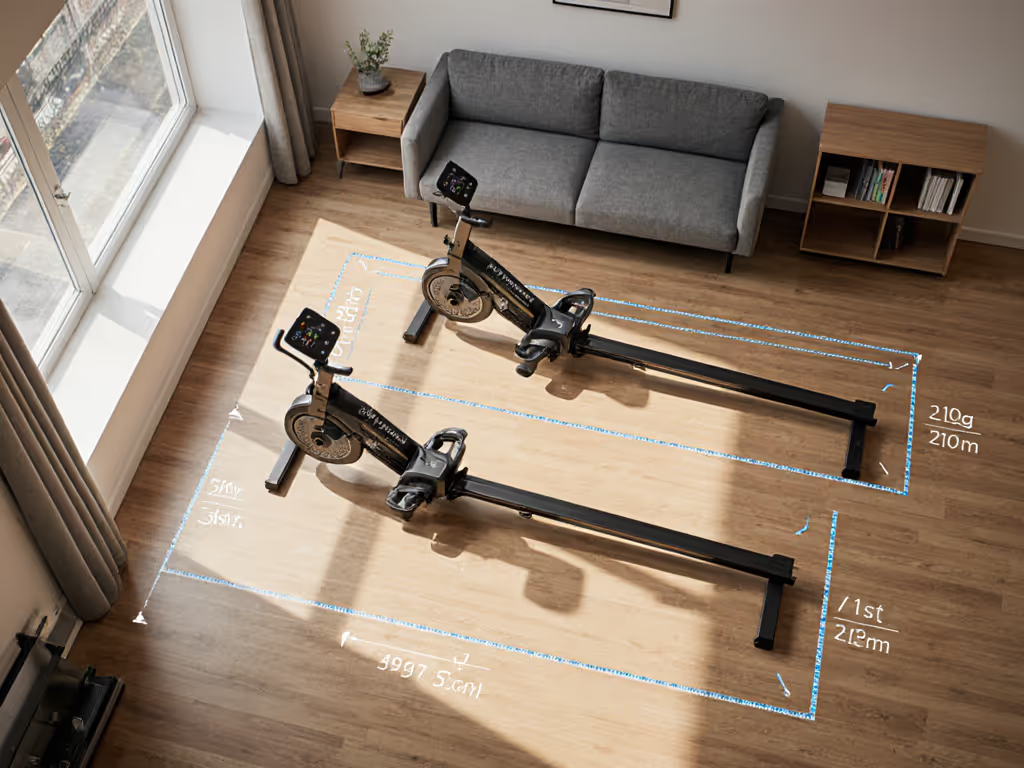
Apartment Rower Space Comparison: Precise Measurements
6th May•10 min read
When you're comparing rower subscription value across the premium smart rower market, the monthly fees can feel like the tail wagging the dog. You've already committed $2,000 to $2,500 for the machine itself, and now you're staring at recurring charges that range from $24 to $50 per month (plus wondering whether you'll actually use the content or just row in silence after six weeks). But here's what gets overlooked: smart rower subscription analysis isn't about finding the cheapest membership. It is about matching the content, technology, and community to your actual fitness habits so that every dollar you spend reinforces the reason you bought the machine in the first place.
You've probably noticed that buying a smart rower feels incomplete without a subscription. Unlike a Concept2 erg (where you pay once and row forever), today's connected machines tie their best features (guided workouts, live classes, adaptive resistance, performance tracking) behind paywalls. The immediate tension is obvious: if a machine costs $2,299 and the subscription is $44 per month, that's an extra $528 annually on top of the hardware investment. Multiply that over five years, and you're spending $2,640 in subscriptions alone, potentially more than the machine.
But cost alone doesn't tell the story. What actually matters is whether the subscription keeps you rowing consistently or becomes an unused feature you resent paying for each month. Many rowers I've worked with (especially those managing multiple body sizes and fitness levels in a household, or fitting a machine into a tight apartment) quickly discovered that the "perfect" machine had a subscription model that didn't align with how they actually want to train. Some wanted coached technique work; others craved solo, data-driven interval sessions. A few simply wanted the option to skip the app entirely and row with a podcast.
The real problem isn't the subscription cost itself, it's the lack of a clear framework to compare what you're actually getting. For a clear apples-to-apples breakdown, see our cost-per-workout analysis of rower subscriptions.
Traditional rower reviews (and plenty of marketing copy) fixate on touchscreen size, video quality, and instructor charisma. Those elements matter for experience, but they don't directly address whether a subscription aligns with your life. Here's what most buyers do not think through until they are three months into ownership:
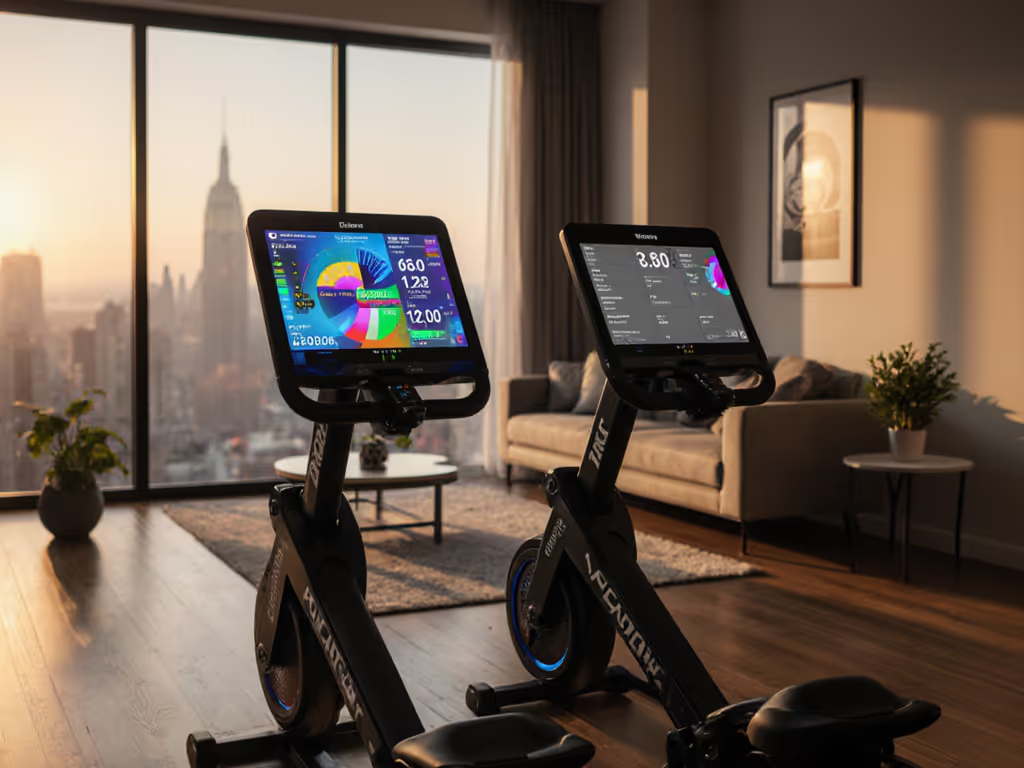
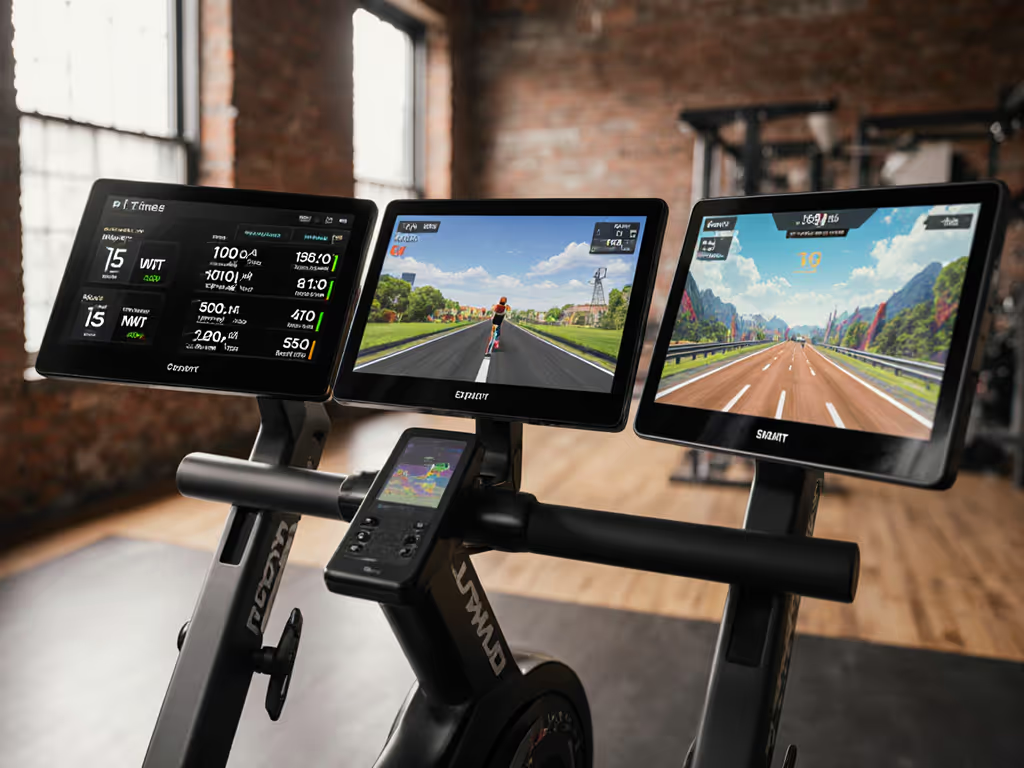
Content Depth and Variety: Hydrow has invested heavily in cinematic production, with filmed routes on scenic rivers and coastal waters, instructor-led technique coaching, and a broad library spanning rowing, yoga, strength, and mobility. That breadth appeals to someone seeking a lifestyle membership a single app to lean on for multiple workout modalities. Ergatta, by contrast, leans into adaptive, self-paced gaming-style workouts with performance-driven metrics and leaderboard competition. If your motivation is intrinsic you want data, autonomy, and personalized difficulty calibration Ergatta's model directly serves that. Aviron sits somewhere in between, with a $24 to $29 monthly cost that signals a more streamlined content approach.
Integration and Flexibility: This is where subscription philosophy reveals itself. Hydrow and Ergatta both offer "no-subscription" rowing modes (Hydrow's Just Row feature and Ergatta's basic workouts), but the full experience is locked behind the paywall. That's a deliberate choice. Neither brand prioritizes open standards (FTMS/ANT+ broadcast and syncing to Apple Health, Strava, or Garmin) in the same way some users demand. If flexibility and data ownership matter to you (if you want to bring the rower's metrics into your broader fitness ecosystem instead of living inside one app), that's a limitation worth factoring in. If open standards and third-party app syncing are priorities, read our guide to data freedom rowers.
Warranty and Support: Aviron bundles a 10-year frame warranty with its package, signaling confidence in durability. Hydrow and Ergatta offer 12 months (or extendable) and 5 years on the frame, respectively. Over a subscription relationship that might last 10 years, warranty coverage shapes long-term value. A rower that ages well and has responsive support means fewer extra costs when wear and tear arrives.
Aviron's membership at $24 annually or $29 monthly, and Ergatta's $29 to $39 range, serve users who prefer a leaner experience. For Aviron, this reflects a simpler interface and smaller on-demand library compared to Hydrow. For Ergatta, the lower price reflects a philosophy of letting data and adaptive algorithms drive the workout, rather than cinematic production.
Best fit: Solo athletes, data enthusiasts, or couples who don't need extensive guided content. If you're rowing 3 to 5 times per week and you know your training style (intervals, steady-state, power), a lower-tier sub won't feel like a limitation. Cost over five years: roughly $1,440 to $2,340.
Hydrow's $44 to $50 monthly rate reflects investment in content production, instructor curation, and a broader ecosystem. The trade-off: you get live and on-demand classes with experienced rowing coaches, scenic filming, and cross-training options (yoga, strength, mobility). This model assumes you'll benefit from variety and the motivational pull of community or coach-guided structure.
Best fit: Users building a sustainable long-term habit who value coaching cues and scenic/social elements. Couples with different fitness levels may also find Hydrow's variety (yoga, strength, rowing) appealing if sharing a subscription across multiple goals. Cost over five years: roughly $2,640 to $3,000.
Here's where the analysis gets practical. Rather than asking "Is $29 better than $44?", ask these questions:
1. Will the content type keep you consistent? If guided, scenic workouts energize you, Hydrow justifies its premium. If you're driven by metrics, progression, and autonomy, and content distracts you, Ergatta's game-based model may feel like genuine value. If you're skeptical of app dependency altogether, Aviron's leaner sub is a relief. The machine only works if you use it. Comfort that removes excuses is the subscription you'll actually keep.
2. Does the machine function without the subscription? Both Hydrow and Ergatta allow basic rowing without payment. Aviron also offers limited rowing modes. This is a lifeline if your internet drops, your subscription lapses, or you want a break from the app ecosystem. Verify this works as advertised before purchase.
3. What's the cost of switching or downgrading? Hydrow's $44 per month is non-negotiable if you want live classes and the full on-demand library. Ergatta offers annual discounts ($348/year vs. $39/month month-to-month), rewarding commitment. Aviron similarly rewards annual payment. If budget tightens mid-year, look for machines with flexible, downgrade-friendly policies.
4. Is there a household match? Do you share the rower with a partner of different size, fitness level, or content preference? Hydrow supports multiple profiles per household, so your rowing data stays separate, and you can each access your own preference of classes. That might justify the higher sub fee if household harmony (and fitness adherence) matters. Ergatta and Aviron also support multi-user, but verify the experience is equally smooth.
5. Will the metrics matter six months from now? Premium subs promise detailed performance tracking, wattage splits, and stroke analytics. If you're training for a goal (endurance test, speed benchmark, consistency streak), those metrics embed the rower into your training mindset. If you're rowing for general health and stress relief, granular data may feel like noise. Know yourself here.

Let's say you have a $3,500 budget for the machine plus three years of subscription.
Scenario A: Hydrow Wave ($1,995) + $44/month
Three-year cost: $1,995 + $1,584 = $3,579. You get a solid mid-range machine, cinematic content, multiple workout modalities, and the motivational pull of live classes. For an in-depth look at hardware, noise, and class experience, check our Hydrow Wave review. Trade-off: You're near or over budget, and the Wave has a fixed 16-inch screen (less adjustable than the Arc model).
Scenario B: Aviron Strong ($2,499) + $29/month
Three-year cost: $2,499 + $1,044 = $3,543. You stay under $3,500, keep a heavier user weight capacity (507 lbs vs. 375 lbs for Hydrow Wave), and get a 10-year frame warranty. The subscription is leaner, but if you're self-directed, that's freedom. Upright storage needs no wall kit.
Scenario C: Ergatta ($2,499) + annual membership ($348/year)
Three-year cost: $2,499 + $1,044 = $3,543. You're at the same three-year cost as Scenario B, but with a 5-year frame warranty (better than Aviron's parts warranty) and water resistance (quieter, more forgiving on joints). For details on the gaming-style training and water feel, see our Ergatta Rower review. Trade-off: Water tanks require periodic maintenance and pose a leak risk.
Each scenario lands near $3,500 for hardware plus three years of content, but the experience, durability promise, and lifestyle fit are completely different. The best value is the one that matches your body, space, and motivation.
Hydrow's content library is larger and more polished, with instructor expertise validated through on-camera cues and athlete backgrounds. Ergatta's library is smaller but algorithmically personalized difficulty adapts to your output, so each session feels calibrated to you, not a preset class template. Neither is objectively better; both reflect different philosophies on engagement.
A user rowed approximately 700,000 meters over time with an Ergatta subscription and reported high satisfaction with HIIT workouts and low maintenance, a data point suggesting that for certain users, the self-guided, adaptive model delivers long-term consistency.
The smartest rower subscription is the one you don't think twice about renewing each month because the workouts genuinely fit how you live. A $50 per month Hydrow membership is terrible value if you only row twice a month and you'd row anyway with a podcast. A $24 per month Aviron sub is mediocre value if you crave guided coaching and end up paying for Peloton anyway. And a $29 per month Ergatta plan is unbeatable if adaptive, self-paced training is exactly what your brain needs at 6 a.m. before work.
Measure against your actual habits and motivation, not marketing promises. Pull the machine metrics and content feature list into a spreadsheet. Cross-reference against your body type, space constraints, and training style. Then ask: which subscription removes the friction between intention and action?
That clarity turns a $30 to $50 monthly choice into confidence you can defend, and a rower that stays in your apartment long-term instead of gathering dust.
Before committing to a subscription model, spend 15 minutes mapping your actual rowing behavior: frequency per week, preferred workout length, whether you train solo or with a partner, and how much you value coaching versus autonomy. Then layer in the three-year cost, warranty coverage, and whether each platform's content library genuinely excites you. Contact each brand's support team to ask about household profiles, no-subscription modes, and whether you can trial the app for a few days many offer trial periods. Finally, test the rower in person if possible, paying attention to seat comfort, handle diameter, and foot strap fit. A machine that feels good removes the excuses to skip; a subscription that aligns with your motivations makes the monthly charge invisible. Both together? That's the definition of value worth repeating.