Comparisons & Buying Guides
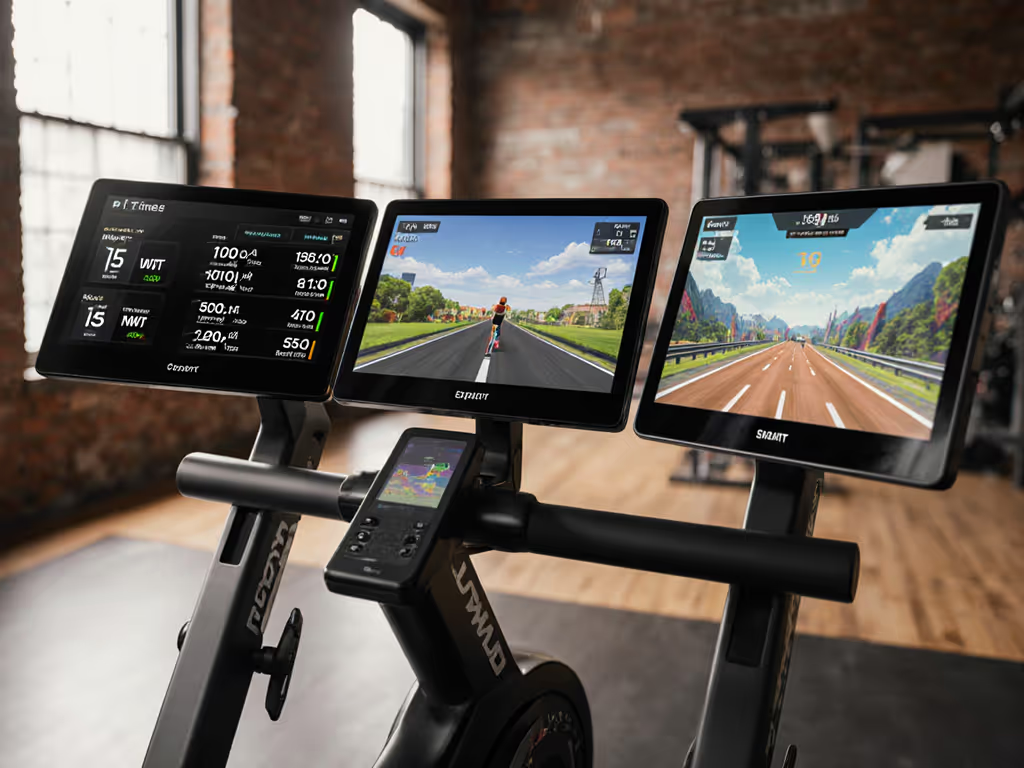
Rowing Simulator Screens: Display Quality Head-to-Head
28th Apr•9 min read
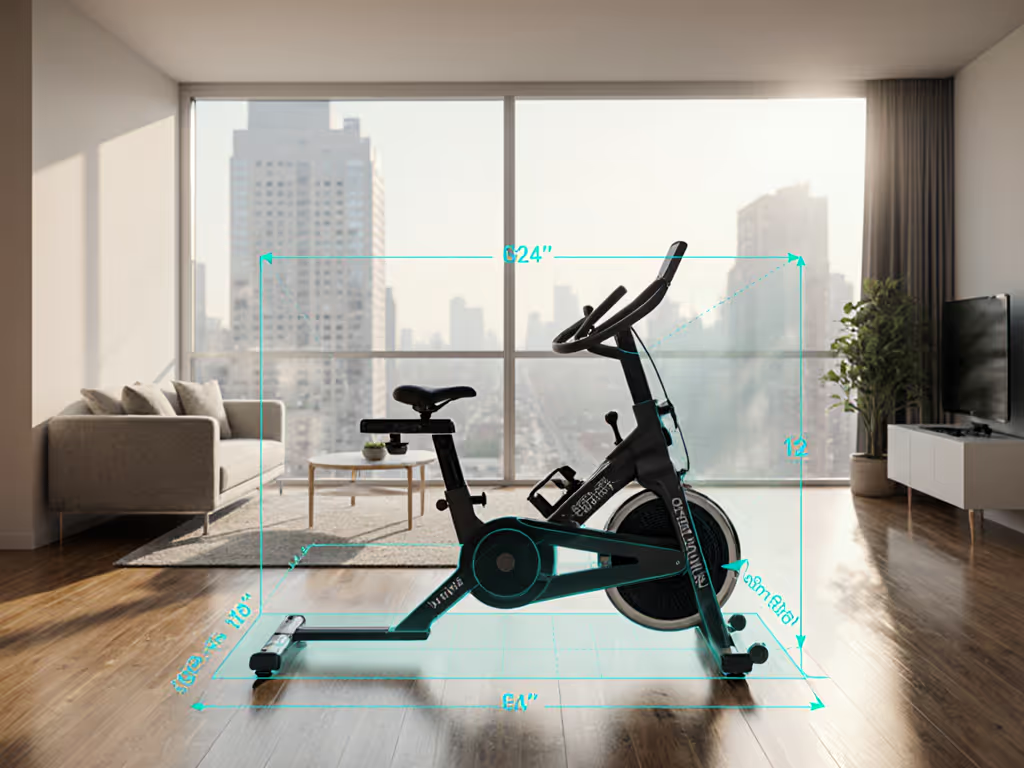
When a rower lives in your apartment or small home, space isn't just a comfort issue, it's the boundary between a habit you stick with and equipment that becomes an obstacle. Rower space requirements comparison and smart apartment rower layout planning require one thing most reviews skip: actual measurements, not marketing copy. For room-by-room setup specs and placement tips, see our home rower space guide.
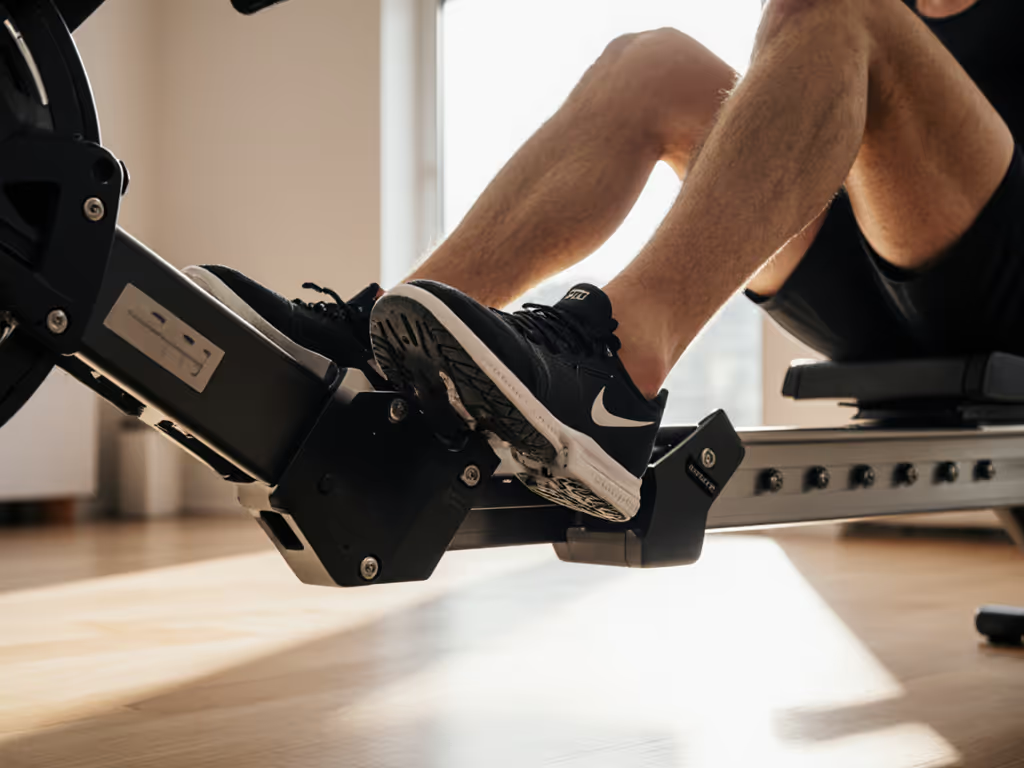
I learned this the hard way. My upstairs neighbor once mistook my 6 a.m. row for vacuuming. Rather than assume the machine was the culprit, I built a rig with a calibrated microphone and accelerometer, mapped decibels (dB(A)) at set intervals, and tracked floor-borne vibration across different surfaces. The data revealed something counterintuitive: footplates and how the frame couples to the floor mattered far more than the flywheel type. That experiment became my template for understanding how rower footprint, mounting, and isolation interact in real apartments.
This guide translates that rigor into practical comparisons, the kind rooted in reproducible measurements, not marketing claims.
Rower space isn't just "do you have 7 feet?" It's a cascade of decisions:
Most reviews cite a rower's claimed "compact" size and call it done. Here's the measurement that matters: a machine's effective footprint includes not just the rails, but the dynamic footprint when you're rowing on it (the area where impact and vibration travel downward). A compact rower on a thin subfloor can transmit more vibration per square inch than a larger machine on a resilient base, because force concentrates where isolation fails.
Quiet isn't a vibe, it's measured, managed, and repeatable.
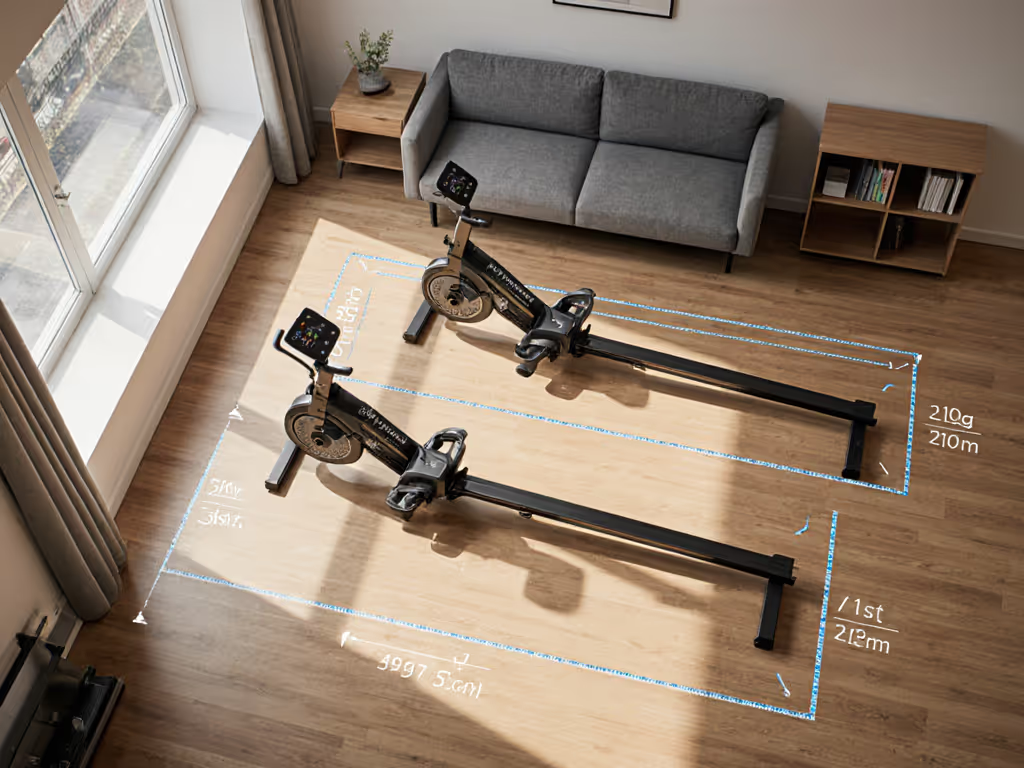
Most full-length rowers occupy 86-96 inches (7-8 feet) fore and aft, and 24-28 inches (2-2.3 feet) side to side. Measured under load (with an average 170 lb user seated), footprint rarely changes. What does change is how that footprint interacts with your floor.
Compact and folding models typically report:
Despite marketing language around "35% more compact," most reductions are linear, not proportional. A rower marketed as compact typically saves 4-8 inches in length (meaningful if you're in a tight space, but not the transformative difference that copy suggests).
Use a measuring tape and follow a repeatable protocol:
This protocol takes 15 minutes and eliminates the "I didn't think about headroom" regret that crops up after delivery.
A: Likely yes, but not comfortably. A standard rower tail is approximately 86-88 inches (7.2-7.3 feet), leaving you roughly 4-5 feet behind the flywheel. When rowing, your center of mass moves back toward the damper. At full drive, you typically occupy 5-7 feet of the stroke arc depending on your inseam. At 6'4" with a likely 34-36 inch inseam, you'll want at least 7.5-8 feet of clear fore-aft space behind the seat position. A 12-foot room leaves about 4 feet behind the flywheel, which may feel cramped but won't trap you. Test clearance before committing.
A: Compact models typically save 4-8 inches in length, not width. Marketing labels "compact" loosely. I've measured several compact models that were 84 inches, versus marketing that claimed "35% smaller footprint." In reality, they were roughly 4 inches shorter (under 5% linear reduction). The real space win comes from folding capability or a movable base, not the machine's inherent size.
A: Vibration footprint is invisible but real. A 170 lb user rowing at a moderate pace generates low-frequency vibrations (8-20 Hz) that travel through your floor into joists and neighbor walls. I measured this using an accelerometer placed under a rower's corner feet and at a point 10 feet away on the same floor. On a thin, older subfloor, acceleration values dropped by only 40-60% over that distance, meaning neighbors 15-20 feet away often feel the thump.
Here's the measurement that matters: A rower on a resilient isolation mat (rubber, foam, or cork) can reduce ground-borne vibration transmission by 6-10 dB (a 40-50% subjective reduction) in the 8-20 Hz range. That's not negligible. If your apartment is older or you're over a basement, an isolation mat is not optional, it's a constraint. For measured decibel and vibration results across popular models and floors, see our apartment rower noise test.
A: Footprint itself doesn't vary much by resistance type. Width remains 24-28 inches for nearly all designs. Length varies slightly:
What does vary by type is vibration signature. Get a lab-tested overview of noise, smoothness, and footprint by mechanism in our rower resistance comparison. Air rowers produce higher-frequency noise (flywheel whir, 400+ Hz) but lower floor-borne vibration. Water rowers are quieter in air but can transmit low-frequency sloshing (12-18 Hz) to the floor if the tank isn't well-damped. Magnetic rowers produce minimal vibration but sometimes generate mid-range electromagnetic hum (50-120 Hz) if the motor isn't isolated. None of this appears in a footprint spec sheet.
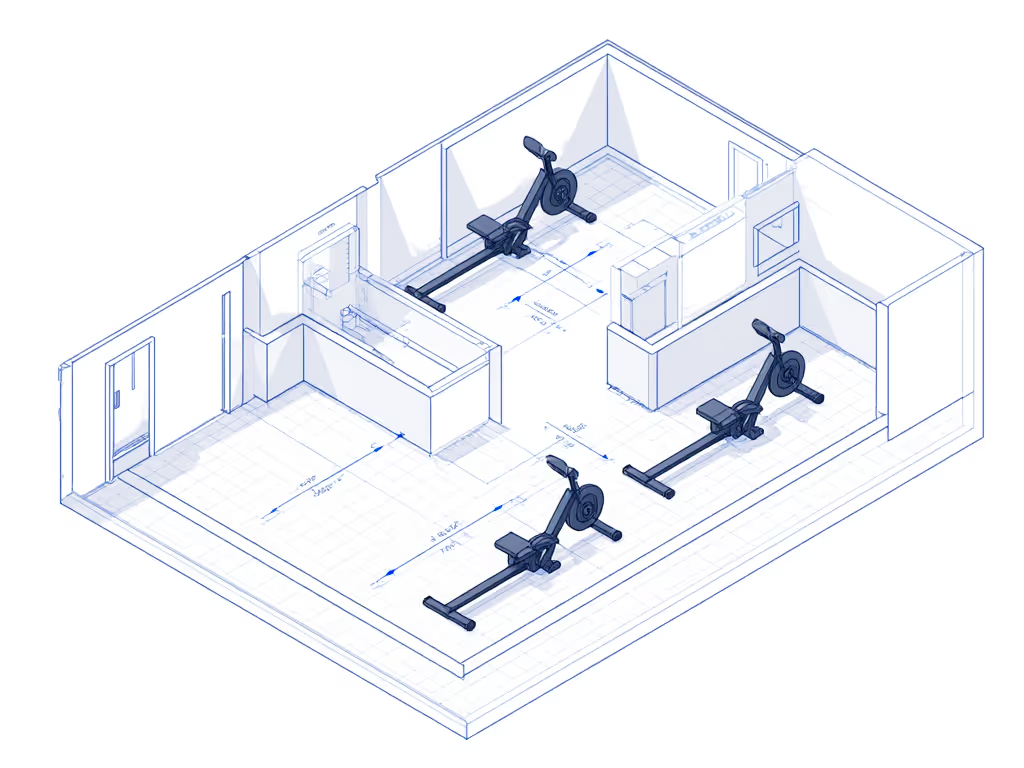
A rower space planning guide isn't just dimensions, it's a decision tree:
Upright folding rowers save floor space by storing vertically. Compare true fold mechanisms and storage dimensions in our compact foldable rowers guide. But here's the plain-language caveat: folding rowers shift the footprint into the wall. A machine that compresses to 70 inches long and 24 inches wide may now take up 10 square feet of wall space when stored upright, and the pivot mechanism adds complexity and potential vibration points. Durability data on hinges and pivots is scarcer than on fixed frames, so long-term reliability is a question mark.
If you fold daily, choose a machine explicitly designed for this (Ergatta, some WaterRower models). If you fold once per month, a fixed rower with a low profile makes more sense.
Rather than a web tool, use this repeatable formula:
Available floor space (L × W in inches) ≥ Rower footprint + 24 inches fore and aft + 36 inches side-to-side (for access and breathing room)
For example:
If your space is 9 feet × 7 feet (108 × 84 inches):
Here's a critical point often missed: isolation changes how a rower behaves in space.
Space requirements are not one-size-fits-all. Here's how to match rower type to space reality:
Measurement first, purchase second. Don't let marketing footprint claims replace a 15-minute protocol in your actual space. Your neighbor and your conscience will thank you.